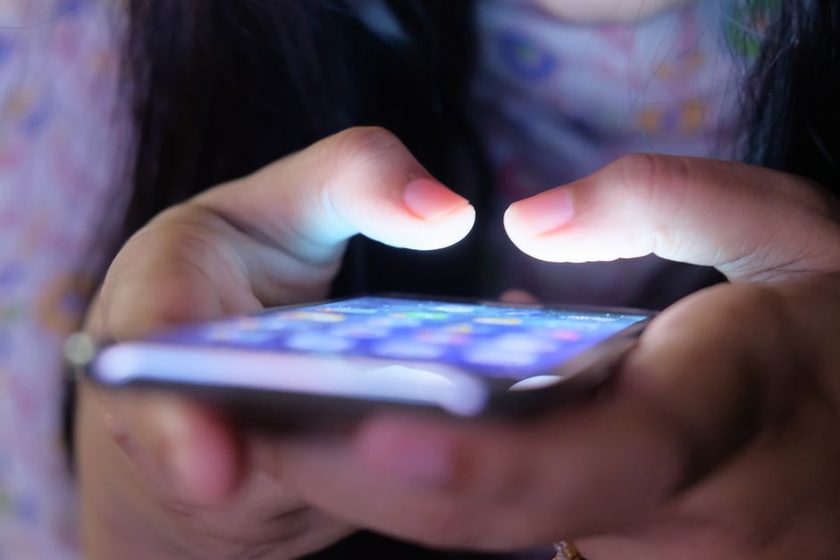
Few topics attract more heat than screens and attention. On one side, dire warnings that smartphones have dissolved our ability to focus. On the other, dismissive takes that it's all moral panic with no real evidence. As is often the case, the honest picture sits awkwardly in the middle — and the middle is where useful advice lives.
This article aims for that balance. It's educational, not medical advice, and it's not a treatment for any condition, including ADHD or internet-related problems. If screen use is seriously affecting your life or mental health, a qualified professional is the right next step.
What "screen time" even means
The first problem with the debate is the phrase itself. "Screen time" lumps together wildly different activities: video-calling a grandparent, writing an essay, reading a long article, doomscrolling outrage feeds, playing a strategic game with friends. These have about as much in common as "time spent indoors."
So the more useful question isn't "how much screen time?" but "what is the screen time doing to me?" The content, the context, and whether you chose it all matter far more than the raw minutes.
Counting hours misses the point. The better question is whether your screens are tools you reach for on purpose — or traps you fall into by accident. Most people have some of each.
What the evidence generally suggests
Research here is large, messy, and often contested. A few themes do come up fairly consistently, though always with caveats about correlation versus cause:
- Heavy multitasking is linked to attention costs. People who frequently switch between many media streams tend to perform somewhat worse on certain attention tasks — though it's unclear which way the arrow of causation runs.
- Notifications interrupt focus. Each buzz or banner pulls attention, and there's a real cost to returning to a task after an interruption — often more than people realize.
- Feed-style apps can feel hard to stop. Infinite-scroll designs exploit tendencies in how we seek novelty and reward, which is why "five more minutes" so often becomes thirty.
- Late-night screens may affect sleep. Bright evening light and engaging content can delay sleepiness for some people. See how sleep shapes focus.
What the evidence does not cleanly show is that normal screen use permanently "destroys" attention spans. The reality is more about friction and habits than about damage.
Why it feels like screens wreck focus
Even if the apocalyptic story is overstated, many people genuinely feel more distracted than they used to. There are good reasons for that feeling, and they're mostly about design rather than brain damage:
| Factor | How it affects attention |
|---|---|
| Pull of social feeds | Engineered to capture and hold attention; rewards rapid checking. |
| Constant notifications | Break focus; each one carries a "resumption cost" to get back. |
| Switching between apps | Each switch taxes working memory and resets context. |
| Always within reach | The phone removes the effort that used to gate access to distraction. |
| Speed of content | Fast-cut, high-stimulation content may leave slower-paced tasks feeling dull. |
Notice that none of these require your brain to be "broken." They're environmental. And because they're environmental, you can change them.
Practical ways to tune your habits
The goal isn't to become a monk. It's to make screens a tool you use on purpose more of the time. A few changes that tend to help, in roughly increasing order of effort:
- Turn off non-essential notifications. The single highest-leverage move. Most apps don't need to interrupt you.
- Move tempting apps off the home screen. A little friction dramatically cuts accidental opens.
- Use grayscale. Switching your phone to grayscale makes feeds noticeably less compelling for many people.
- Keep the phone out of reach during focus blocks. Not face-down — in another room. See the focus-and-break cycle.
- Create screen-free windows. The first 15 minutes of the morning (see a calm morning routine) and the last hour before bed are good places to start.
- Charge the phone outside the bedroom. A simple change that improves both sleep and morning focus.
The honest case against panic
It's worth pushing back on the more overheated claims, because panic leads to bad advice. Three honest cautions:
- Correlation isn't causation. If heavy phone users report poorer focus, that doesn't prove the phone caused it — stress, sleep, or other factors may be doing the work. We cover these in how stress affects concentration.
- Screens are not one thing. Video calls with loved ones, online learning, and creative tools are genuinely valuable; the harm, where it exists, is concentrated in specific patterns like compulsive feed-scrolling.
- Generational hand-wringing is eternal. Every new medium — novels, radio, TV, video games — has been accused of ruining young minds. Some concerns were valid; most were overblown. Approach with curiosity, not certainty.
When it's more than a habit
For most people, the strategies above are enough. But for some, screen use — particularly to feeds, games, or pornography — becomes genuinely compulsive, interfering with work, relationships, sleep, and mood. That's not a willpower problem, and it deserves the same seriousness as any other behavior that's affecting wellbeing.
If that resonates, please talk with a qualified mental health professional. Therapies and support exist for these patterns, and they work far better than guilt and solo willpower.
A gentler relationship
You don't need to throw your phone in a lake. The realistic aim is a relationship with your devices where you reach for them on purpose more often than you fall into them by accident. Small environmental changes — silenced notifications, the phone in another room during focus, a screen-free hour before bed — tend to move that balance more than any app-limit tracker.
If you'd like a gentle nudge in that direction, a focus companion like MindClarity can quiet notifications during a focus block and remind you to wind down in the evening — turning your phone from a source of interruption into a quiet ally for your attention.
Notice, over a week or two, how it feels to use your devices more deliberately. Most people find they don't miss the time they reclaim. The screens are still there — they're just back in their proper place, which is as tools, not as default.